
Latest Analysis

Independent analysis, commentary and investigations on Africa, the Great Lakes Region and international accountability.

Fw: [uRwanda_rwacu] US, UK Want Review of “1994 Genocide Against the Tutsi” Appellation – THE CHRONICLES | Rwanda


US, UK Want Review of "1994 Genocide Against the Tutsi" Appellation
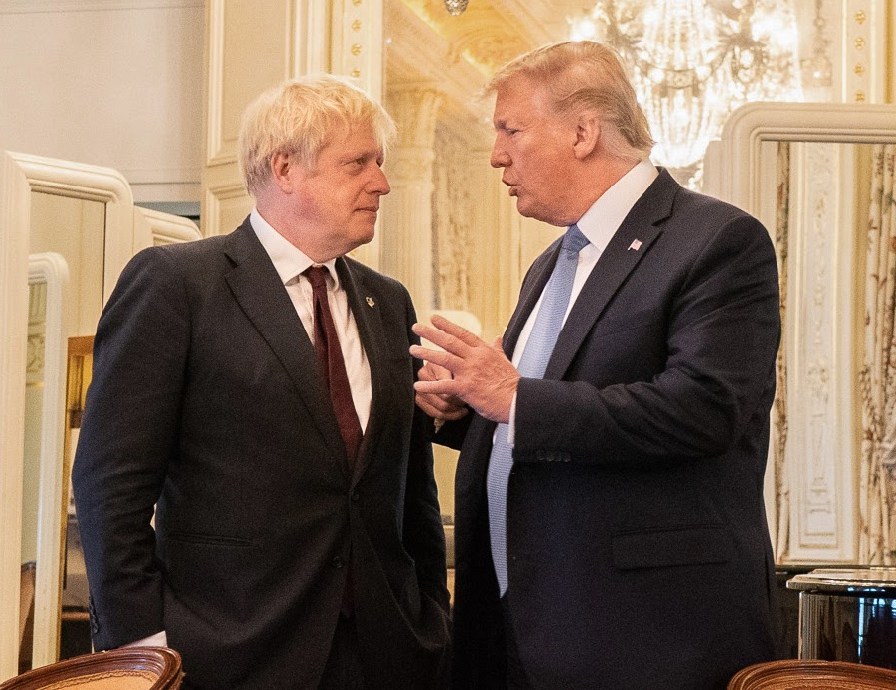
alt UK Prime Minister Boris Johnson and US President Donald Trump during the latter's visit in London

In a rare shift of policy, both the United States and the United Kingdom are fiercely opposed to referencing the genocide which took place in Rwanda in 1994 as "1994 genocide against the Tutsi", according to documents only emerging now.

The US and UK also accuse government of Rwanda of attempting to "force" its desires on the international community. In response, Rwanda also accuses both countries of "distorting" facts about the genocide.

The letters from all sides about the issue give a rare insight into a long political fight that seems to be getting underway. The emergency of the battle between Rwanda and its biggest backers over what really happened in Rwanda, gives new ammunition to a growing platform of people and institutions that have cast doubt on the genocide.

The heart of the matter here is that up until April 2018, President Paul Kagame had put his personal political weight behind a push for a change of the terminology and language used on the massacre of Tutsis in Rwanda. All along, the media, governments, international bodies and academia called it as the "Rwandan genocide" or "genocide in Rwanda".

Government of Rwanda successfully managed to convince the UN General Assembly to unanimously adopt the language the "1994 genocide against the Tutsi", and April 7, when the genocide began, as "International Day of Reflection on the 1994 Genocide against the Tutsi in Rwanda".

Since then, it became illegal in international law to refer to the genocide that took place in Rwanda by any other appellation. All countries were also expected to adopted national laws that address the genocide as per that UN General Assembly resolution.

Two years down the road, the U.S and UK, both veto-wielding UN members, want the "1994 genocide against the Tutsi" wording revisited. Through their permanent representatives at the UN, both countries as well as Ireland (together with UK), submitted official positions that are going to shock the world.

The US, UK positions, communicated separately, were filed in response to the draft resolution prepared by Rwanda and other partner states, in the lead up to April 7, 2020. Rwanda filed this new resolution to back up that of 2018.

In this project, Rwanda prepared the draft in collaboration with Argentina, Gambia, Norway and Qatar. The new draft resolution was to require the UN, individual states and other bodies to arrest fugitives, back Rwanda's judicial system, and also support survivors..

The new draft resolution also sought to require the UN Secretary General "to modify the title of the outreach programme to "outreach programme on the 1994 genocide against the Tutsi in Rwanda and the United Nations" and to take measures to mobilize civil society for remembrance and education in the context of the International Day of Reflection on the 1994 Genocide against the Tutsi in Rwanda, in order to help to prevent future acts of genocide, and to report annually to the General Assembly on the implementation of the programme."

The new draft text was submitted by Rwanda to President of the UG General Assembly on March 6. The following days and weeks were for intense negotiations on the spirit and actual wording of the draft by all countries concerned.

The United States, UK and Ireland submitted written letters for record to express their opposition to the wording of the draft text and the 2018 resolution. All the documents are published in the UN database and have been obtained by The Chronicles.

The new twist is highly significant because the US and UK have stood out as the single biggest backers of the government of Rwanda. They have provided international legitimacy and money.

The US, in addition to tens of millions of annual funding, it has put up $40m to hunt for eight key genocide fugitives including the alleged financier of the genocide Felicien Kabuga caught last week in Paris. Former US President Bill Clinton has put Rwanda on his to-do list for many years.

The UK too, though accused of taking too long to prosecute five genocide suspects on its territory, has also provided international legitimacy and money to Rwanda. Former UK Prime Minister Tony Blair has particular attachment to Rwanda, including even proposing how cabinet is organized.

According to sources, the US and UK did also oppose the "1994 genocide against the Tutsi" language in the 2018 UN resolution. However, they did not veto and it passed. The difference with current situation is that the US-UK opposition has become public. Why they decided to go public about their positions is what will give fodder to the genocide negationist lobby.

In letter dated April 20, the US Ambassador to the UN, Kelly Craft, writes: "the United States is concerned that changes made to the text – starting in 2018 and extended today – narrow the focus of the resolution to the Genocide against the Tutsi in Rwanda, and fail to fully capture the magnitude of the violence that was committed against other groups."

"Many Hutu and others were also killed during the genocide, including those murdered for their opposition to the atrocities that were being committed. Failing to honor and remember these victims presents an incomplete picture of this dark part of history."

"Revising the language used to describe past genocides sets a dangerous precedent and risks leading to revisiting other days of reflection. We support the resolution's overall aim to reflect on the genocide in Rwanda, but also must underscore that our understanding of the circumstances of the genocide in Rwanda has not changed."

The US added: "We must also express our disappointment in the negotiation process that led to this resolution. The result is a weaker text that strips out references that would have benefited the Government of Rwanda in its efforts to seek accountability, while forcing Rwanda's allies, including the United States, to accept language we find concerning. While we are not calling for a vote lest others get the wrong impression about our unwavering support for justice for victims of the genocide, we are concerned that the negotiation process potentially weakened the text, limited the impact, and added unexpected costs."

The US envoy even goes further: "The United States firmly believes that respect for all human rights, including freedom of expression, is critical in the prevention of genocide and other mass atrocities. We reiterate that any efforts to counter incitement and hate speech should respect freedom of expression."

The UK's chargé d'affaires at its the UN mission, Jonathan Allen, in April 20 letter, writes: "Whilst we did not break silence on the text, we would like to use this opportunity to express some reservations on the text."

"These reservations relate to the substance – we disagree with framing of the genocide as purely as the "1994 genocide against the Tutsi"…."

"As noted in previous resolutions, we believe that Hutus and others who were killed should be recognized. Our concerns also relate to the process – we note that there were some shortcomings in regards to the transparency in the negotiation and adoption processes."

Four days after the US, UK letters of opposition to the new draft, Rwanda filed its response, and the language in their particularly on the UK, shows President Kagame and his team clearly amused with what was unfolding.

Through Rwanda's UN envoy Valentine Rugwabiza, Kigali is clearly not ready to be bullied. While the US, UK letters are about two pages, Rwanda submitted lengthy rebuttal of four pages.

Rugwabiza writes: "It is interesting to note that while both Explanation of Positions (EOPs) underscored the importance of historical facts and collective memory in averting the recurrence of genocide, they stated the exact opposite by distorting these very historical facts and by ignoring the UN Security Council resolutions and the International Criminal Tribunal for Rwanda (ICTR) jurisprudence to which they are both bound."

She added: "The demands being made against Rwanda appear to create a mechanism of remembrance outside the principles of the United Nations. However, if the positions of the United States and United Kingdom suggest the renegotiation of the UN Genocide Convention in as far as a collective decision is taken to remember "others" outside of the targeted group for extermination, then indeed this call for the renegotiation of the convention and a suggestion that as it stands the Convention is inadequate and that it should be revised beyond the "narrow" confines of targeted groups."

Kigali says the fact that April 13 is dedicated to "remembrance of politicians and others who, although not being part of the targeted group, were killed for opposing the extermination of Tutsis", shows that it is committed to the "pursuit of reconciliation".

The Rwandan envoy tells the Americans and British that: "Rwanda has walked the tight rope of applying the Convention of commemorating the group that was targeted for extermination while being as inclusive as possible without compromising the very purpose of genocide commemoration."

Adding: "Rwanda supports the US call for member states to hold those responsible for genocide accountable and takes this opportunity to remind the United Kingdom to arrest and try genocide suspects on its territory who are yet to face justice for their role in the 1994 genocide against the Tutsi, as one of the strong measures to prevent impunity and the recurrence of genocide."

Kigali also addresses accusations by the US that it arm-twisted the UN community into taking its position on the draft text. "…with regard to the negotiation process, Rwanda has neither the authority nor the desire to "force" any member into accepting a resolution language," says the Rwandan envoy.

The US and UK, both did not vote against (meaning veto) the new UN resolution, allowing it to pass on April 29.

The new UN General Assembly resolution is titled: "International Day of Reflection on the 1994 Genocide against the Tutsi in Rwanda", adopted by the General Assembly at its seventy-fourth session on 20 April 2020″.

It reflects all the changes submitted by Rwanda together with key ally Qatar and two others, in their original draft from March.

Despite the passage of the new UN resolution, the mere fact that the US and UK opposition was made formally and has been made public, has given rare momentum to President Kagame's virulent critics and their supporters outside Rwanda.

Now, they know their positions are backed up by UK and US. Had it been a country like France which has shaky relationship with Kigali, the opposition to terminology on the genocide would have had less impact as it is going to have going forward.

As of now, it remains unclear what the US-UK positions mean in reality, and what will happen in the years to come. But already, reactions on social media show a big Pandora's box has just been opened.

Email your news TIPS to info@chronicles.rw or WhatsApp +250738160269.
You can also find us on Signal


###
"Hate Cannot Drive Out Hate. Only Love Can Do That", Dr. Martin Luther King.
###
__._,_.___


__,_._,___

Comments

Support Our Work Now !

Africa Realities Media is independent. Your support helps us expose injustice, challenge silence and produce evidence-based analysis on Africa and the Great Lakes Region.

Recent Posts

Show more
Africa Realities Media offre un espace aux écrivains, chercheurs, experts, activistes, voix communautaires, militants, analystes et personnes ayant une expérience vécue qui souhaitent contribuer à des contenus réfléchis, responsables et courageux sur les changements nécessaires dans la région des Grands Lacs, ainsi que sur les réalités politiques, économiques, culturelles et sociales africaines souvent ignorées, minimisées ou mal représentées. Nos articles et vidéos visent à ouvrir le débat, renforcer la sensibilisation, encourager la pensée critique et favoriser une réflexion plus profonde sur les réalités vécues par les populations africaines. Nous voulons aider les peuples de la région des Grands Lacs à mieux comprendre leurs droits, notamment leurs droits humains, leur droit au développement, leur droit à la dignité, à la sécurité, au bien-être et à une vie meilleure. À travers nos contenus, nous cherchons également à rappeler aux décideurs, aux institutions publiques, aux acteurs régionaux et internationaux, ainsi qu’aux responsables politiques, leur devoir de transparence, de responsabilité et de redevabilité envers les populations qu’ils prétendent servir. Notre objectif est de contribuer à une culture de vérité, de justice, de participation citoyenne et de protection égale pour tous les peuples africains.

Why We Exist

Many abuses facing African people are committed by African states, ruling elites, armed groups, military forces and security services. But these abuses are often sustained by international silence, Western lobbying, trade interests, migration deals, mineral access, diplomatic partnerships and unequal global accountability. Africa Realities Media exposes that system.

Lived Experience Matters

Survivors, displaced communities, refugees, families affected by repression, journalists, activists, women, young people and diaspora voices are not passive subjects. They are knowledge holders. Their experiences must shape policy, advocacy, journalism and public debate. The people closest to injustice are often closest to the solutions.

Our Principle

Africa Realities Media is rooted in one principle: African lives deserve equal truth, equal justice and equal protection.

Popular Posts

[RwandaLibre] Itangazo ry'inama yahuje amashyaka i Buruseli kuwa 01/02/2014 -

  http://www.veritasinfo.fr/m/article-122363461.html Itangazo ry'inama yahuje amashyaka i Buruseli kuwa 01/02/2014 Nk'uko byari biteganyijwe, kuri uyu wa gatandatu tariki ya 01/02/2014, i Buruseli mu Bubiligi hateraniye inama y'amashyaka atavuga rumwe n'ubutegetsi bwa Perezida Paul Kagame. Ku mashyaka icumi yari yatumiwe, ayabonetse mu nama ni atandatu (60%), ari yo : 1. Forces Démocratiques Unifiées (FDU-Inkingi) ; 2. Forces Démocratiques de Libération du Rwanda (FDLR) ; 3. Pacte Démocratique du Peuple (PDP-Imanzi) ; 4. Parti pour la Démocratie au Rwanda (PDR-Ihumure) ; 5. Parti Social (PS-Imberakuri) ; 6. Rwandan Dream Initiative (RDI-Rwanda Rwiza). Ihuriro FCLR - Ubumwe naryo ryari rihagarariwe muri iyo nama.   Mu gutangira inama, abayijemo batoye umuyobozi wayo. Bamaze gusuzuma no kwemeza umurongo w'ibyigwa, bemeje ko muri iki gihe, ubufatanye  bw'amashyaka ya opposition ari ngombwa cyane  ...

The FDLR Myth: How Rwanda Weaponises a Diminished Threat to Justify Occupation

The FDLR Myth: How Rwanda Weaponises a Diminished Threat to Justify Occupation Investigation Exposes Contradictions in Rwanda's Security Narrative For over a decade, Rwanda has justified its military presence in eastern Democratic Republic of Congo by citing threats from the FDLR, a Hutu militia group linked to the 1994 genocide. But an investigation into FDLR's actual capabilities, Rwanda's military operations, and patterns of violence reveals a narrative that does not match reality. The FDLR threat, whilst real, has been systematically exaggerated and manipulated to justify objectives that have nothing to do with the militia group. Introduction The Democratic Forces for the Liberation of Rwanda (FDLR) occupies a central position in Rwanda's justification for military intervention in eastern Democratic Republic of Congo. For more than two decades, Rwandan authorities have portrayed the militia group as an existential threat requiring sustaine...

[RwandaLibre] Re: Itangazo ry'inama yahuje amashyaka i Buruseli kuwa 01/02/2014 -

  @Mbera. Urakoze gutanga ibisobanuro birambuye kuri iyi ngingo. Ndagirango cyokora nkosore aho wafifitse nkana ugamije kujijisha rubanda.   Uragira uti: 1- [Hari ]urubuga rwa internet rw'umwimerere rwashyizweho muri 2007 http://www.fdu-rwanda.org/  n'urundi rubuga rwashinzwe n'abasigaye bakorera mu nzego bashyizeho bo nyuma y'aho Présidente agiriye mu Rwanda, arirwo http://www.fdu-rwanda.com/  rwashinzwe muri 2011. Nk'umuntu wamye uba Umunyamabanga mukuru wa FDU-Inkingi ukaba n'umuvugizi wayo kandi ukaba igikomeje kubyiyuta n'ubwo zahinduye imirishyo, wagombye kuba uzi ko Original website ya FDU-Inkingi yari  www.fdu-udf.org nk'uko bigararara muri iri tangazo ryo kuwa 23 Kamena 2010 umbere y'amakimbirane yatangiye muri january 2011: Nta kandida wigenga uzava muri FDU http://www.victoire2010.com/uploads/media/UMUKANDIDA_WA__FDU_01.pdf Kuba ruriya rubuga rundi rwaragiyeho nyuma byo ntawe utabizi kandi byar...

The Aggressor’s Complaint: Why Rwanda’s “Biased” US Sanctions Argument Echoes Russia

Kigali wants Washington to punish Congo too. But a ceasefire that leaves the occupier in place is not peace; it is occupation without noise. African lives are not worth less. African deaths are not normal. Western interests must never become a licence to kill African people. Introduction: A Familiar Complaint On 29 June 2026, Rwanda’s Minister of Foreign Affairs, Olivier Nduhungirehe, sat before the cameras of France 24 and declared that his country was “disappointed by the increasingly biased US mediation” in the conflict with the Democratic Republic of Congo. He asked why sanctions had targeted only Rwanda. He called the measures unfair, one-sided and counterproductive. Weeks earlier, President Paul Kagame had told Jeune Afrique that sanctions and threats were insults thrown at Rwanda, and accused Washington of exerting heavy pressure on Rwanda while treating the DRC more delicately. The grievance sounds reasonable until you remember where you have heard it before. Since 2022, the Kr...

Analyse de l'audition de M Dacian Cioloș, candidat au poste de Secrétaire général de la Francophonie

  Le 30 juin 2026, pour la première fois en cinquante-six ans d'existence de l'Organisation internationale de la Francophonie, les candidats au poste de Secrétaire général ont été auditionnés publiquement devant les ministres des Affaires étrangères des 53 États membres de plein droit, réunis en Conférence ministérielle extraordinaire à Paris. Parmi les quatre prétendants au mandat 2027-2030, qui sera attribué par les chefs d'État au XXe Sommet de la Francophonie à Phnom Penh les 15 et 16 novembre 2026, figure un profil inédit : Dacian Cioloș, ancien Premier ministre de Roumanie, ancien commissaire européen à l'Agriculture et ancien président du groupe Renew au Parlement européen, seul candidat non africain de la course. Cet article, premier d'une série de cinq consacrée aux auditions, analyse la prestation de M. Cioloș sur huit axes : la vision, l'innovation, le développement des communautés locales, la promotion de la langue française, les conflits et la s...

THE DUCLERT REPORT: A Comprehensive Critical Analysis

  Political Bias — Archival Failures — Racial Framing — Neocolonialist Process — Historical Distortion June 2026 Note on citations: In-text references in blue italics indicate page numbers from the Duclert Report (vie-publique.fr/files/rapport/pdf/284672.pdf, 2021 English summary). Introduction The Duclert Report, formally titled France, Rwanda and the Tutsi Genocide (1990–1994) , was submitted to President Emmanuel Macron on 26 March 2021 by the Research Commission on French Archives Relating to Rwanda and the Tutsi Genocide, chaired by Professor Vincent Duclert. Produced after two years of archival work and running to nearly 1,000 pages, it was presented as a landmark in historical transparency: the first time France had opened its state archives to systematic scholarly examination of its role in one of the worst genocides of the twentieth century. The commission examined archives from the Presidency of the Republic, the Prime Minister’s office, the Ministry of Europe a...

Rwanda: Victoire Ingabire’s Speech and Quotes

http://www.victoire-ingabire.com/Eng/victoires-quotes/ Victoire Ingabire's Speech and Quotes I agree that there was a genocide by Hutu extremists against the Tutsis, that is the reality. The people who did this need to face justice. But there were also other crimes against humanity, including the killing of Hutus. I don't believe in violence and war is not the solution to the problems that face this country. People say there's stability in Rwanda but this stability is based on repression … We need stability based on freedom. I don't understand how democratic countries can remain friends with a government that doesn't allow democracy. The democratic UK is supporting a dictatorship. Shall I die or live, be detained or released what we have achieved will not go back. This movement is stronger than me. Remanding me in captivity or silencing my voice can only postpone the revolution. It cannot stop the movement. Unity and Reconciliation Speech at Gisozi Genocide Memori...

LE RAPPORT DUCLERT: Une analyse critique exhaustive

  B iais politique — Défaillances archivistiques — Cadrage racial — Processus néocolonial — Distorsion historique. Juin 2026 Note sur les citations : les références en italique bleu indiquent les numéros de pages du Rapport Duclert (vie-publique.fr/files/rapport/pdf/284672.pdf, résumé en anglais, 2021). Introduction Le Rapport Duclert, intitulé officiellement La France, le Rwanda et le génocide des Tutsi (1990–1994) , a été remis au président Emmanuel Macron le 26 mars 2021 par la Commission de recherche sur les archives françaises relatives au Rwanda et au génocide des Tutsi, présidée par le professeur Vincent Duclert. Produit après deux ans de travail archivistique et comptant près de mille pages, il a été présenté comme un moment fondateur de la transparence historique : la première fois que la France ouvrait ses archives d’État à un examen scientifique systématique de son rôle dans l’un des génocides les plus meurtriers du vingtième siècle. La comm...

Analyse de l'audition de Mme Juliana Lumumba, candidate au poste de Secrétaire général de la Francophonie

La refondation proclamée, l'architecture manquante Fille de Patrice Lumumba et ancienne ministre congolaise, Juliana Lumumba porte la candidature de la République démocratique du Congo au poste de Secrétaire général de la Francophonie, dont le titulaire du mandat 2027-2030 sera désigné par les chefs d'État au XXe Sommet de la Francophonie, prévu à Phnom Penh les 15 et 16 novembre 2026. Son audition publique du 30 juin 2026 à Paris, devant les ministres des Affaires étrangères des 53 États membres de plein droit, était particulièrement attendue : sa candidature incarne à la fois le rééquilibrage africain de l'organisation et le face-à-face diplomatique entre Kinshasa et Kigali, dont l'élection est devenue l'un des théâtres. Cet article, deuxième d'une série de cinq consacrée aux auditions, analyse sa prestation sur huit axes : la vision, l'innovation, le développement des communautés locales, la promotion de la langue française, les conflits et la sécurité en...

Auditions OIF 2026 : le désaveu de la méthode Macron et le troisième mandat contesté de Mushikiwabo

Une réforme tardive qui révèle l’injustice du système de consensus imposé à la Francophonie Introduction Le 30 juin 2026, à Paris, la Francophonie a vécu une première en cinquante-six ans d’existence : les candidats au poste de Secrétaire général de l’Organisation internationale de la Francophonie (OIF) ont été auditionnés publiquement devant la Conférence ministérielle, chacun exposant sa vision devant les représentants des États et gouvernements membres. Louise Mushikiwabo, Juliana Lumumba, Coumba Bâ et Dacian Cioloş se sont prêtés à cet exercice inédit. Cette réforme est une bonne chose. Elle arrive cependant trop tard, et son existence même constitue un aveu : celui d’un système de désignation qui, depuis la création de l’organisation, a fonctionné sans transparence, sans compétition et sans équité. Africa Realities Media analyse ici ce que cette réforme dit du passé récent de la Francophonie, pourquoi elle constitue un désaveu implicite de la méthode employée par Emmanuel Ma...

Why Africa Realities Media Is Different

Africa Realities Media speaks to Africa and to the developed world. Many abuses facing African people are committed by African states and ruling elites, but they are often protected by international silence, lobbying, public relations, trade interests, migration deals and unequal global accountability. While governments pay lobbyists to present a good image abroad, ordinary African people continue to face violence, hunger, disease, poverty, repression and exclusion. We challenge the normalisation of African suffering and demand equal truth, equal justice and equal protection.

Pourquoi Africa Realities Media est différent?

Africa Realities Media s’adresse à l’Afrique et au monde développé. De nombreux abus subis par les peuples africains sont commis par des États africains et des élites dirigeantes, mais ils sont souvent protégés par le silence international, le lobbying, les relations publiques, les intérêts commerciaux, les accords migratoires et une responsabilité mondiale inégale. Tandis que des gouvernements paient des lobbyistes pour présenter une bonne image à l’étranger, des Africains ordinaires continuent de faire face à la violence, à la faim, aux maladies, à la pauvreté, à la répression et à l’exclusion. Nous contestons la normalisation de la souffrance africaine et exigeons une vérité égale, une justice égale et une protection égale.

BBC News

Policy and Systems Change

Our work is designed to trigger debate, discomfort and action. We do not only expose injustice; we work for policy and systems change. We want governments and institutions to address the root causes of inequality, disadvantage, discrimination, exclusion and barriers affecting African people. We believe lasting change must be shaped by people with lived experience.

Exposing Injustice in Africa

Africa Realities Media is an independent African accountability platform based in London. We report, analyse and challenge the systems that shape African suffering, silence African victims and protect abusive power. We are not here to repeat diplomatic language. We are here to ask the questions that are often avoided: why are African deaths treated as normal? Why are African victims given less urgency? Why are governments that imprison, exclude, displace or kill their own people protected when they serve powerful international interests?

Africanews

Africa Realities Media gives space to writers, researchers, experts, activists, community voices, campaigners, analysts and people with lived experience who want to contribute thoughtful, responsible and courageous content about the changes needed in the region, as well as the political, economic, cultural and social African realities that are often ignored, minimised or misrepresented. Our articles and videos aim to encourage debate, raise awareness, stimulate critical thinking and support reflection. We seek to help people in the Great Lakes Region understand their rights to human rights, development and wellbeing, while also encouraging decision-makers to be more transparent, responsive and accountable.

Appel à contributions

Sensibilisez le public aux causes qui vous tiennent à cœur. Prenez part au changement que vous souhaitez voir émerger. Aidez à combattre l’injustice partout où elle se manifeste.

Africa Realities Media accueille des articles originaux, analyses, tribunes, réflexions communautaires et commentaires fondés sur des faits concernant la région des Grands Lacs africains, ainsi que les questions liées à la justice, aux droits humains, à la gouvernance, aux conflits, à la paix, aux réfugiés, aux ressources naturelles et à la responsabilité publique en Afrique.

Nous accueillons également les annonces concernant de nouvelles ou d’anciennes publications liées à nos domaines d’intérêt. Vous pouvez annoncer gratuitement votre publication, notamment un livre, un rapport, une étude, un article académique ou tout autre travail pertinent.

Les articles doivent être rédigés en anglais ou en français et ne doivent pas dépasser 1 500 mots.

Veuillez inclure le nom complet de l’auteur, qui sera publié avec l’article s’il est accepté.

Avant de soumettre votre article, veuillez d’abord lire nos pages du site web afin de vérifier si votre article correspond à nos priorités éditoriales, à nos thèmes et à nos domaines d’intérêt.

Si vous avez un article, un commentaire ou une annonce de publication à partager avec un public plus large, veuillez l’envoyer par email à :

africarealitiesmedia@gmail.com

Nous étudierons la possibilité de publier gratuitement les articles et annonces de publications appropriés s’ils répondent à nos critères éditoriaux, notamment la pertinence, la clarté, l’originalité, l’intérêt public, le respect des communautés concernées et l’utilisation responsable des informations et des preuves.

Les articles sont publiés tels qu’ils sont soumis s’ils répondent à nos critères et à notre politique éditoriale. Nous ne procédons pas à une modification supplémentaire de votre article avant sa publication.