
[RwandaLibre] Statement By The United Nations Special Rapporteur On The Rights To Freedom Of Peaceful Assembly And Of Association At The Conclusion Of His Visit To The Republic Of Rwanda
Statement By The United Nations Special Rapporteur On The Rights To Freedom Of Peaceful Assembly And Of Association At The Conclusion Of His Visit To The Republic Of Rwanda
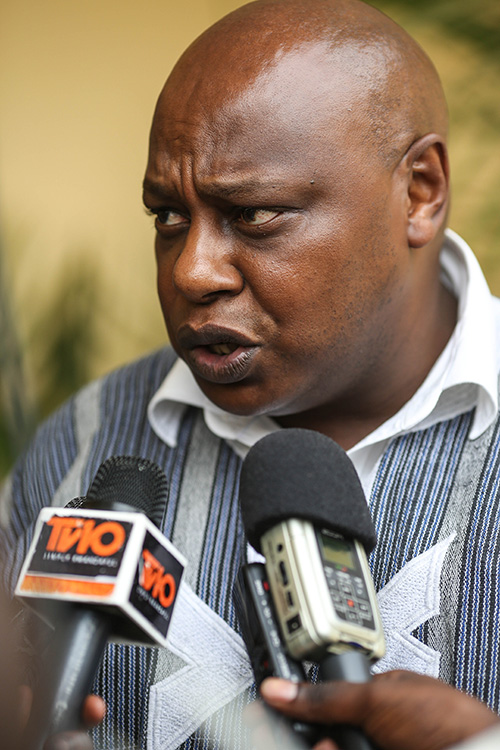
I would like to thank the Government of the Republic of Rwanda for inviting me to carry out a visit to the country. I commend Rwanda for being the first country in Africa to extend an invitation to my mandate since its establishment by the Human Rights Council in October 2010. I thank the Government for its excellent cooperation before and during the conduct of this mission. I am most grateful to all interlocutors I have met. I had fruitful exchanges with the Prime Minister, the Minister of Justice, the Minister of Internal Security, the Minister of Local Government, the Minister of Public Service and Labour, the Minister of Trade and Industry, the Minister of East African Community, the Permanent Secretary of the Ministry of Foreign Affairs, and the Inspector General of Rwanda National Police. Moreover, I had the opportunity to meet with the Governor of the South Province and the Mayor of Huye.
I also met the Chief Justice, the President of the High Court, the Prosecutor General, the Deputy Speaker of the Parliament, and the Chair of the Committee on Unity, Human Rights and fight against Genocide of the Chamber of Deputies and its members. I had meetings with the National Unity and Reconciliation Commission, the Director of the Directorate General of Immigration and Emigration, the Chief Executive Officer of the Rwanda Governance Board, representatives of the Rwanda Human Rights Commission, and national and international non-governmental organizations, leaders of political parties, the Private Sector Federation, and representatives of diplomatic missions.
As Rwanda, and indeed the world, prepare to honour the memory of the victims of the Genocide 20 years since 1994, I would like to extend my best wishes and strength to the people of Rwanda, all of whom have been touched by this most egregious of human rights violations. Bon courage. I was humbled when I visited Rwanda during the 10th and 15th commemorations of the Genocide against the Tutsis and moderate Hutus.
As a Special Rapporteur, I am independent from the United Nations and I work voluntarily in my personal capacity. The overarching purpose of my visit to Rwanda is to contribute to the efforts it has undertaken in its path towards democratization, greater protection of human rights, and development with recommendations as to how Rwanda can better respect, promote and implement international human rights law and standards as it applies to the freedoms of peaceful assembly and association.
Rwanda has come a long way since 1994. There has been remarkable progress in developing infrastructure, building institutions and ensuring stability and security. Twenty years is a short time in the life of a nation, which makes the achievements all the more outstanding. Indeed few could have predicted that the reconstruction of the Rwandan State could have reached such broad and deep levels in 1994. I am truly impressed by the resilience of the Rwandan people, the vibrancy of the economic sector, the relatively low levels of corruption, efforts at providing universal healthcare and social safety nets, and the neat and clean environment. This must be recognized, and applauded.
In the spirit of constructive dialogue, I wish to make some preliminary observations and recommendations. The Government has assured me that it sees this as an opportunity to consolidate the progress made over the years towards the realization of the rights to freedom of peaceful assembly and of association in the country.
Rwanda has ratified key international human rights instruments and committed itself to observe them. Moreover, in 2011 during the Universal Periodic Review Rwanda accepted all recommendations pertaining to the freedoms I am mandated to monitor. My assessment is guided by these principles.
Freedom Of Peaceful Assembly
The Constitution guarantees freedom of peaceful assembly. Law No. 33.91 provides for prior notification for demonstrations on public roads and public assemblies. But it also then requires prior authorization for assemblies in open air, on public roads or in a public space in the interests of public safety, tranquillity or health. This creates an inherent contradiction in requiring both prior notification and authorization, paving the way for arbitrary decisions by the concerned authorities.
I firmly believe that the exercise of the right to freedom of peaceful assembly should not be subject to authorization by the authorities. At most, a prior notification procedure is sufficient, in order to facilitate peaceful assemblies and to take measures to protect public safety and order and the rights and freedoms of others. Moreover, spontaneous assemblies should be recognized in law and exempted from prior notification.
I was informed that in practice only peaceful assemblies which authorities favour are allowed to take place, such as the commemorations marches organized by Ibuka, which are also facilitated by the authorities. Peaceful protests voicing dissent and criticizing Government policies are reportedly not allowed.
For instance, students who presented a petition to the Prime Minister protesting against the reduction of scholarships were arrested for illegal demonstration. Similarly, members of a religious group who staged a peaceful protest to submit a petition to the President were arrested on the same ground. In addition, Mr Sylvain Sibomana, Secretary General of the Unified Democratic Forces FDU-Inkingi, was arrested with a fellow party member outside a courtroom while attending the trial of Ms Victoire Ingabire, Chair of the same party. They both wore T-shirts with the inscription "democracy and justice". Mr Sibomana was injured by law enforcement officials in the course of his arrest.
According to the authorities, peaceful protests do not occur because there are other avenues to express criticism and solve contentious issues. That is well and good. However, not only are such avenues limited, but as illustrated by the aforementioned cases, the fear of being targeted has contributed to individuals and associations refraining from exercising their right to peaceful assembly to voice their grievances.
From my meeting with the Inspector General of the Police, it came out clearly that law enforcement officials view peaceful assemblies solely as an issue of ensuring public order, instead of adopting a human rights based approach that would facilitate assemblies as an integral right of every person in Rwanda to be protected robustly.
Let me emphasize that peaceful assemblies should not be feared. Rather they should be encouraged for there is value in expressing disagreement and differences peacefully and publicly. Indeed, there is no better gauge of what citizens think than peaceful protests. And it is in the interests of the state to allow public and peaceful assemblies as a "release valve" in order to avoid recourse to other means of dissent and disagreement that are not desirable. As stated by the Human Rights Council, "everyone must be able to express their grievances or aspirations in a peaceful manner, including through public protests without fear of reprisals or of being intimidated, harassed, injured… arbitrarily arrested [and] detained…" (resolution 22/10).
The undue restrictions on freedom of peaceful assembly have also impacted negatively on the enjoyment of freedom of association as several associations have been prevented from holding general assemblies, a key requirement for forming a political party or a non-governmental organization. Indeed, several political activists, holding dissenting views, have been arrested for holding meetings to recruit members even in bars.
Freedom Of Association: Non-Governmental Organizations
The Constitution guarantees freedom of association. This right is further elaborated in the recently enacted laws governing the organisation and functioning of local and international non-governmental organizations (NGOs). Although the legislation is an improvement from previous laws it nevertheless has maintained onerous and burdensome conditions for registration.
Local NGOs are required to hold a general assembly in order to appoint their legal representatives and office-bearers. Among other requirements, the minutes of these meetings including the signatures of all those who attended the general assembly should then be submitted to the regulatory authority, the Rwanda Governance Board (RGB). In my discussions with representatives from various organizations, it was apparent that while some organizations were not required to notify local authorities prior to holding their general assemblies, others – particularly the ones more critical of government – reported that they had to get prior authorization for these meetings. I urge the Government to ensure that prior notification or authorisation is not required for associations to hold private meetings.
To organise a general assembly means expending considerable financial and human resources, which many organizations can scarcely afford. Both local and international NGOs are required to provide letters of collaboration with authorities in the districts in which they operate. Again the financial cost, time and energy it takes to obtain these letters, from all districts in which the organizations wishes to operate, constitutes a serious drain on the resources of organizations. The Directorate of Immigration, which is responsible for the registration of international NGOs, requires that in addition, they provide evidence of funding for the period which they seek registration, up to 5 years. Most funding sources are unable to guarantee funding for multiple years. Many international NGOs are therefore forced to seek annual registration as they can only provide proof of financial resources for a year at a time. The enormous time and energy necessary to put together the registration requirements could be devoted to activities benefitting the community.
The contrast between the registration process for NGOs—a non-state actor–and that of businesses—also a non-state actor–in the private sector is striking. The business environment in Rwanda is notable for the ease with which businesses can be registered and operate. It is one reason for Rwanda's economic transformation. A similar approach to the civil society sector will yield significant economic, social and political dividends, allowing for innovation and creativity.
As I have stated in my first thematic report to the Human Rights Council on best practices, registration procedures should be simple, non-onerous and expeditious. I consider that the right to freedom of association protects associations that are not registered and, in fact, registration should be by choice of association members and not a pre-requisite for the operation of associations.
Many of the interlocutors I met highlighted the role of the RGB in the life of local NGOs and faith-based organizations. Apart from registering local NGOs, RGB also has the responsibility of monitoring whether local NGOs and FBOs conform with domestic law. This broad language provides unjustifiable room for RGB to interfere with the internal affairs of local NGOs.
The case of the Rwandan League for the Promotion and Defense of Human Rights (LIPRODHOR) was brought to my attention in this regard. Of particular concern is the partisan role that RGB reportedly played in changing the leadership of LIPRODHOR under questionable circumstances. Similarly, RGB was implicated in determining the leadership at the Rwandan Collective of Leagues and Associations for the Defense of Human Rights (CLADHO).
The independence and ability of associations to run their internal affairs without external interference is of paramount importance in the exercise of the right to freedom of association. I see no justification for RGB involving itself in leadership wrangles within local NGOs. Resolution of such conflict should be the responsibility of the membership of the organization and ultimately the courts, with RGB's role purely to endorse the leadership determined by the NGOs themselves or the courts. As a general principle, Government's role in the civil society sector should mirror the role it plays in the private sector–solely that of registering entities within the sector.
It is abundantly evident to me that the Government of Rwanda has a clear vision of where it wants the country to be by 2020. This vision of development is inclusive and creates various spaces for interaction amongst the different stakeholders. At the local level, interactions take place in the context of Joint Action Development Forums (JADF) and plans, and I understand that these collaborations have been fruitful.
Nevertheless, I am concerned that the development partnerships between the Government and local and international NGOs are of a compulsory nature. This is evidenced by the necessity of collaboration letters, action plans that must align with the development objectives of the district, down to the level of activities, and in some cases demands for performance contracts to be concluded between local authorities and all NGOs. In fact, the perception of some in Government and in the civil society sector appears to be that NGOs are implementers of Government policy.
In order to protect the autonomy and independence of NGOs, I recommend that any partnerships between Government and civil society be voluntary rather than compulsory. In the development field, NGOs should be able to determine and operate within their priority areas of concern without interference or direction by authorities. This does not preclude areas that authorities do not consider to be a priority. The power of innovation is enhanced through openness. A multiplicity of interventions and approaches will serve to strengthen the capacity of the sector to respond to the needs of their beneficiaries and ultimately, to Rwandans as a whole.
I am also concerned by the stigmatization of local and international NGOs that has persisted in State-controlled media, and from Government officials, especially following the decisions of some donor agencies to channel funding for development through NGOs. While there should be transparency between donors and the State with regard to the sectors they are supporting and how much, the same approach the State takes to the private sector—which is regarded as a key actor in development—should obtain. Moreover, labelling of civil society actors who are critical of the Government as enemies of the State compromises their safety.
Let me also urge the Government to urgently complete its investigations, in a transparent way, into the death of Mr Gustave Sharangabo Makonene from Transparency International-Rwanda murdered in July 2013. As long as the circumstances of his death remain unclear, this case has a chilling effect on the NGO community in Rwanda.
Freedom Of Association: Political Parties
Concerning political parties, I have observed a lack of space for individuals to express dissenting views. The Government of Rwanda favours "consensus politics" and discourages public criticism and dissent. I am concerned that there is no genuine pluralistic society.
Indeed it appears that every dissenting political leader who rejects this consensus approach gets into legal trouble, with negations of the genocide, divisionism, sectarianism, and even spreading rumors being the favoured charges. In other cases, corruption charges for those who leave the RPF are preferred. And in all such cases, these politicians are accused of violence or having links with violent groups. This sends a chilling and unacceptable message that peaceful public disagreement with the Government is equivalent to criminality. The legitimate combat against terrorism, and other security considerations, should not be used as a bogeyman to restrict the right to freely associate.
This is the case of Ms Victoire Ingabire, Mr Sylvain Sibomana and Mr Anselme Mutuyimana from the FDU Inkingi, an opposition party denied registration to date, as well as of Mr Bernard Ntaganda from the PS Imberakuri. They were all sentenced from 4 to 15 years on similar charges. The sentences of 5 years and more will ban them from ever holding leadership positions in any political organization, according to the Law governing political organizations and politicians. And in all these cases, I was informed that they were being pressured to leave their parties and join the RPF or its allied parties.
History teaches us that not allowing peaceful dissent and branding a criminal every politician who resists the consensus approach, increase the attractiveness of alternative ways of dissent that are not helpful to Rwanda, or its people. I was therefore heartened to hear the Justice Minister's assurance which I hope can be implemented that: "if you are dissenting peacefully, please go ahead."
Rwanda favours a political order based on consensus led by the ruling party. The Government and Parliament seem to agree that Rwanda needs to be more cautious with political parties than with NGOs, given its recent history. But 20 years since the Genocide, the successful reconstruction of the Rwandan State should provide confidence to the Government that it can and should allow peaceful dissent and disagreement. Whether political parties decide to align with the Government is their choice, but this should not be compulsory in law or in fact.
On registration of parties, in addition to the barriers opposition political parties face when required to hold general assemblies to define their status, the overall process is long, laborious and, in far too many instances, arbitrary. Technical reasons can never justify a 4-year delay to register, as it has been the case for the Green party.
In addition, it is crucial that individuals exercising the right to associate, including opposition party members, are able to operate freely and without fear. State officials' public comments celebrating the killing of an opposition politician inculcate fear within the opposition.
Now turning to the National Human Rights Commission of Rwanda, I note the work it has undertaken in promoting and protecting human rights in the country. However, relevant stakeholders should take adequate measures to enhance the independence and capacity of the Commission.
I call on the Office of the High Commissioner for Human rights and the United Nations Development Programme to continue their efforts to strengthen the capacity of civil society to engage on human rights issues, without using State bodies as intermediaries. I also urge them to continue their work capacitating State officials to meet their obligations under international law. I further call on the international community to especially continue providing political and financial support to genuinely independent NGOs.
To conclude, once again, I wish to state that the above preliminary conclusions and recommendations are shared as a friend of Rwanda. I have offered, and the Government has accepted, my help to further strengthen the exercise of the rights to freedom of peaceful assembly and of association.
I thank you for your attention.
| Reply via web post | Reply to sender | Reply to group | Start a New Topic | Messages in this topic (1) |
.To post a message: RwandaLibre@yahoogroups.com; .To join: RwandaLibre-subscribe@yahoogroups.com; .To unsubscribe from this group,send an email to:
RwandaLibre-unsubscribe@yahoogroups.com
_____________________________________________________
More news: http://amakurunamateka.blogspot.co.uk/; http://ikangurambaga.blogspot.co.uk/
--------------------------------------------------------------------------


Comments
Post a Comment