Latest Analysis

Independent analysis, commentary and investigations on Africa, the Great Lakes Region and international accountability.

Dispatches: After the M23 – Congo’s Next Challenges

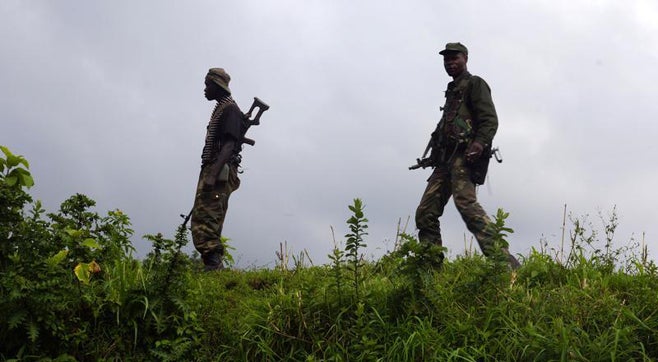
The M23 admitted defeat today, bringing an apparent end to the Rwandan-backed armed group's devastating attacks on civilians in the Democratic Republic of Congo. That's a big step forward, but the work to account for the crimes committed by all sides in this complicated conflict has only begun.

The M23's sudden defeat is partly due to the Congolese army's military operations and the crucial support provided by the United Nations peacekeeping force, MONUSCO, and its new African-led Intervention Brigade.

But the key may have been mounting international pressure on Rwanda to stop supporting the M23. After aid suspensions to Rwanda by key donors in 2012 and 2013, public denunciations from its close allies, and phone calls to Rwandan President Paul Kagame from United States Secretary of State John Kerry and United Kingdom Foreign Secretary William Hague when the latest round of fighting began in late October, the Rwandan government may have concluded that its support to the M23 had become too damaging to its public image. In the recent fighting, the M23 rebels did not get the military support from Rwanda that they had depended on in earlier operations.  

For the past 19 months, the rebels terrorized civilians: killing and raping them, forcibly recruiting children as soldiers, and targeting anyone who dared to speak out against the abuses. Just yesterday, the M23 shelled the towns of Bunagana and Chengerero, killing at least 15 civilians and wounding many others. Last night, they were pushed out of their two remaining positions, and this morning announced an endto their rebellion.

While many in Congo are likely to celebrate the defeat of the M23, numerous challenges remain. Eastern Congo has been beleaguered by abuses by other armed groups, as well as by theCongolese army itself, which have also been responsible for killings, rapes, and other human rights violations.

Going forward, the Congolese government should focus on the following three priorities:

·      Arrest M23 leaders responsible for war crimes, crimes against humanity, and other serious human rights abuses and bring them to justice in fair, credible trials;


·      Issue explicit orders to all members of the security forces not to carry out revenge attacks or other abuses against members of the Tutsi ethnic group or suspected M23 collaborators. Those implicated in such acts should be promptly brought to justice; and


·      Together with MONUSCO, address the threat posed byother abusive armed groups, including the Democratic Forces for the Liberation of Rwanda (FDLR), the Nduma Defense of Congo (NDC) led by Ntabo Ntaberi Sheka, the Raia Mutomboki, and a number of Congolese Hutu militia groups often referred to as Nyatura. As part of these efforts, urgently implement a new Disarmament, Demobilization, and Reintegration program that provides alternative employment opportunities for ex-combatants and ensure that rebel leaders responsible for serious human rights abuses are arrested and brought to justice.

The Congolese government, with UN and diplomatic support, has shown a strong commitment to addressing the threat posed by the M23 in a way that avoids repeating past mistakes of rewarding war criminals with high-ranking military posts and promoting impunity. It should demonstrate the same resolve when addressing abuses by other armed groups, as well as members of its own security forces.        

Comments

Support Our Work Now !

Africa Realities Media is independent. Your support helps us expose injustice, challenge silence and produce evidence-based analysis on Africa and the Great Lakes Region.

Recent Posts

Show more
Africa Realities Media offre un espace aux écrivains, chercheurs, experts, activistes, voix communautaires, militants, analystes et personnes ayant une expérience vécue qui souhaitent contribuer à des contenus réfléchis, responsables et courageux sur les changements nécessaires dans la région des Grands Lacs, ainsi que sur les réalités politiques, économiques, culturelles et sociales africaines souvent ignorées, minimisées ou mal représentées. Nos articles et vidéos visent à ouvrir le débat, renforcer la sensibilisation, encourager la pensée critique et favoriser une réflexion plus profonde sur les réalités vécues par les populations africaines. Nous voulons aider les peuples de la région des Grands Lacs à mieux comprendre leurs droits, notamment leurs droits humains, leur droit au développement, leur droit à la dignité, à la sécurité, au bien-être et à une vie meilleure. À travers nos contenus, nous cherchons également à rappeler aux décideurs, aux institutions publiques, aux acteurs régionaux et internationaux, ainsi qu’aux responsables politiques, leur devoir de transparence, de responsabilité et de redevabilité envers les populations qu’ils prétendent servir. Notre objectif est de contribuer à une culture de vérité, de justice, de participation citoyenne et de protection égale pour tous les peuples africains.

Why We Exist

Many abuses facing African people are committed by African states, ruling elites, armed groups, military forces and security services. But these abuses are often sustained by international silence, Western lobbying, trade interests, migration deals, mineral access, diplomatic partnerships and unequal global accountability. Africa Realities Media exposes that system.

Lived Experience Matters

Survivors, displaced communities, refugees, families affected by repression, journalists, activists, women, young people and diaspora voices are not passive subjects. They are knowledge holders. Their experiences must shape policy, advocacy, journalism and public debate. The people closest to injustice are often closest to the solutions.

Our Principle

Africa Realities Media is rooted in one principle: African lives deserve equal truth, equal justice and equal protection.

Popular Posts

Why Africa Realities Media Is Different

Africa Realities Media speaks to Africa and to the developed world. Many abuses facing African people are committed by African states and ruling elites, but they are often protected by international silence, lobbying, public relations, trade interests, migration deals and unequal global accountability. While governments pay lobbyists to present a good image abroad, ordinary African people continue to face violence, hunger, disease, poverty, repression and exclusion. We challenge the normalisation of African suffering and demand equal truth, equal justice and equal protection.

Pourquoi Africa Realities Media est différent?

Africa Realities Media s’adresse à l’Afrique et au monde développé. De nombreux abus subis par les peuples africains sont commis par des États africains et des élites dirigeantes, mais ils sont souvent protégés par le silence international, le lobbying, les relations publiques, les intérêts commerciaux, les accords migratoires et une responsabilité mondiale inégale. Tandis que des gouvernements paient des lobbyistes pour présenter une bonne image à l’étranger, des Africains ordinaires continuent de faire face à la violence, à la faim, aux maladies, à la pauvreté, à la répression et à l’exclusion. Nous contestons la normalisation de la souffrance africaine et exigeons une vérité égale, une justice égale et une protection égale.

BBC News

Policy and Systems Change

Our work is designed to trigger debate, discomfort and action. We do not only expose injustice; we work for policy and systems change. We want governments and institutions to address the root causes of inequality, disadvantage, discrimination, exclusion and barriers affecting African people. We believe lasting change must be shaped by people with lived experience.

Exposing Injustice in Africa

Africa Realities Media is an independent African accountability platform based in London. We report, analyse and challenge the systems that shape African suffering, silence African victims and protect abusive power. We are not here to repeat diplomatic language. We are here to ask the questions that are often avoided: why are African deaths treated as normal? Why are African victims given less urgency? Why are governments that imprison, exclude, displace or kill their own people protected when they serve powerful international interests?

Africanews

Africa Realities Media gives space to writers, researchers, experts, activists, community voices, campaigners, analysts and people with lived experience who want to contribute thoughtful, responsible and courageous content about the changes needed in the region, as well as the political, economic, cultural and social African realities that are often ignored, minimised or misrepresented. Our articles and videos aim to encourage debate, raise awareness, stimulate critical thinking and support reflection. We seek to help people in the Great Lakes Region understand their rights to human rights, development and wellbeing, while also encouraging decision-makers to be more transparent, responsive and accountable.

Appel à contributions

Sensibilisez le public aux causes qui vous tiennent à cœur. Prenez part au changement que vous souhaitez voir émerger. Aidez à combattre l’injustice partout où elle se manifeste.

Africa Realities Media accueille des articles originaux, analyses, tribunes, réflexions communautaires et commentaires fondés sur des faits concernant la région des Grands Lacs africains, ainsi que les questions liées à la justice, aux droits humains, à la gouvernance, aux conflits, à la paix, aux réfugiés, aux ressources naturelles et à la responsabilité publique en Afrique.

Nous accueillons également les annonces concernant de nouvelles ou d’anciennes publications liées à nos domaines d’intérêt. Vous pouvez annoncer gratuitement votre publication, notamment un livre, un rapport, une étude, un article académique ou tout autre travail pertinent.

Les articles doivent être rédigés en anglais ou en français et ne doivent pas dépasser 1 500 mots.

Veuillez inclure le nom complet de l’auteur, qui sera publié avec l’article s’il est accepté.

Avant de soumettre votre article, veuillez d’abord lire nos pages du site web afin de vérifier si votre article correspond à nos priorités éditoriales, à nos thèmes et à nos domaines d’intérêt.

Si vous avez un article, un commentaire ou une annonce de publication à partager avec un public plus large, veuillez l’envoyer par email à :

africarealitiesmedia@gmail.com

Nous étudierons la possibilité de publier gratuitement les articles et annonces de publications appropriés s’ils répondent à nos critères éditoriaux, notamment la pertinence, la clarté, l’originalité, l’intérêt public, le respect des communautés concernées et l’utilisation responsable des informations et des preuves.

Les articles sont publiés tels qu’ils sont soumis s’ils répondent à nos critères et à notre politique éditoriale. Nous ne procédons pas à une modification supplémentaire de votre article avant sa publication.