
About Africa Realities Media

Latest Analysis

Independent analysis, commentary and investigations on Africa, the Great Lakes Region and international accountability.

Extremist Tutsis ruling Rwanda should cease the victim game in the Great Lakes region
 

Extremist Tutsis ruling Rwanda should cease the victim game in the Great Lakes region

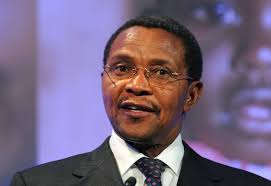
Tanzanian President Jakawa Kikwete whose forces are part of the international brigade of intervention whose objective is to target armed forces operating in Eastern Congo.
Tanzanian President Jakawa Kikwete whose forces are part of the international brigade of intervention of which objective is to target armed forces operating in Eastern Congo.
They are doing this while they are depriving all humanity to other communities both in Rwanda and the Democratic Republic of Congo. The international community has to stop letting them carrying on their cynical tactics at the expense of millions of lives which are as valuable as theirs, though they don't appear to take it that way.
They work closely with the President of Uganda Joweri Museveni because of their ethnical closeness. They helped him take power in Kampala in 1986 while they were in exile there since the 60s.
He paid them back by putting them in power in Rwanda in 1994 after them killing 3 Hutu presidents [2 from Burundi: Melchior Ndadaye on October 21st, 1993 and Cyprien Ntaryamira on April 6th, 1994, and 1 from Rwanda: Juvenal Habyarimana].
They orchestrated the Rwandan genocide and continued in DRC where so far more than 8 million people have been killed as a consequence of their wars to plunder resources of that country.
In between they killed as well Laurent Desire Kabila in 2001 because he was not ready to sell out his country to them. It is true they had helped him remove Mobutu. For that reason they expected him to let them do of DRC whatever they wanted.
It surprises a lot when a criminal plays the victim game.
While in 2011 the Rwandan government sent a killing squad to the UK with a mission to silence for good 2 vocal Rwandan dissidents, its embassy in London didn't shy away from asking the Metropolitan Police to guaranty their total safety when they would be organising their Rwanda Day on May 18th 2013.
In the eyes of the British police, such attitude put them in a position where those who were applying for permission for a right to protest against Kagame look like thugs aimed at causing trouble.
The protesters of London in front of The Troxy on May 18th had almost to force the British police hand to get their permission to protest. It was only released 18 hours before the start of Rwanda Day at that location.
Tutsi extremists leading Rwanda today are at it again after the Tanzanian President Jakaya Kikwete suggested that Kigali and FDLR should hold talks to enable the region achieve durable peace.
Though it was expected that the Rwandan government would object categorically to such idea, what was not, was the fact that it would bring up its arsenal of tools in its denouncement.
The one highlighted here is an open letter that the Rwandan Diaspora living in the United States and supportive of the Kagame regime has written to President Barack Obama in relation to his upcoming visit to Tanzania and the suggested talks between Rwanda and its opposition represented by FDLR .
The letter is published to inform i the readers about the tactics that RPF uses. It has used them so often since taking power that nobody should continue to be fooled while the criminal regime claims its innocence about the suffering of millions of Congolese and Rwandans and at the same time appears ready to carry it on.
Open Letter to H.E. Barack H. Obama, the President of the United States of America
May 27th, 2013
Subject: Remarks by H.E. Jakaya Kikwete, the President of the United Republic of Tanzania at the 21st African Union Summit on May 26th, 2013 in Addis Ababa, Ethiopia
Your Excellency the President of the United States of America
We, the undersigned, being survivors of the genocide against Tutsi and Rwandans legally living in the United States of America are appalled by the statement made by H.E. Jakaya Kikwete, the President of the United Republic of Tanzania at the 21st African Union Summit on May 26th, 2013 in Addis Ababa, Ethiopia in which he called upon the Rwandan government to "negotiate" with the Democratic Forces for the Liberation of Rwanda (FDLR), a rebel group predominantly composed of members of the Interahamwe militia and the Armed Forces of Rwanda that carried out the 1994 genocide against the Tutsi in Rwanda and for the killings of millions of innocent people in the Democratic Republic of Congo.
We salute the United States of America's leadership and commitment to fight the international terrorism, particularly your government's collaboration with the regional and international players to find a solution to the crisis in the Great Lakes region. Not only you were among the first countries, alongside the United Nations, to name the FDLR, formerly known as the Army for the Liberation of Rwanda (ALIR), as a terrorist group but also you have placed many five-million-dollar bounties on some Rwandan genocide perpetrators' heads, including Sylivestre Mudacumura, the FDLR supreme commander who is wanted by the International Criminal Court (ICC) on charges of crimes against humanity and war crimes, including murder, rape, torture and attacking innocent civilians.
We believe President Kikwete is fully informed of these still ongoing heinous crimes committed by FDLR towards millions of innocent Congolese and many foreigners, including innocent Americans Rob Haubner and Susan Miller killed in Bwindi Forest in 1999, to name but a few who lost their lives at the hands of FDLR. In 1994, when more than one million innocent Tutsi were brutally murdered, President Kikwete, then the Minister of Foreign Affairs in Tanzania did not speak up.
Since then, he has seen his country burying hundreds of thousands of Rwandans whose bodies were damped into Akagera River, in Rwanda by the same genocidaires who formed FDLR with the intent to "finish the job "flooding all the way to Tanzania. Given that the International Criminal Tribunal for Rwanda (ICTR) is based in Tanzania, we have no doubt that President Kikwete has been following the court proceedings and should comprehend the threat posed by the FDLR to Rwanda's and the region's peace and security.
We appreciate the support you have provided to Rwanda since 1994. As you know, our country has worked tirelessly, despite many challenges, to successfully repatriate millions of Rwandan refugees since the genocide and have reintegrated many FDLR fighters in the Rwandan Defense Forces.
As the concerned citizens of Rwanda and legal residents of the United States of America, we acknowledge that Rwanda has paid too big a price for too long and feel obliged to openly and strongly question President Kikwete's hidden intentions behind such dreadful remarks and hereby request your office to join us in our call to him to immediately withdraw this shocking statement made at the time when as Rwandans, we are still commemorating the 19th anniversary of the genocide and grieving the loss of our beloved ones. President Kikwete should openly apologize to us as survivors of the genocide in Rwanda and Rwandans in general, Congolese, Americans and many more people who have suffered from the FDLR terrorism.
Your Excellency, we trust that the United States of America cannot support this kind of political dealings that serve, if anything, as a setback to any progress led by Rwanda and many regional and international players to restore peace in the democratic Republic of Congo. Though we welcome your upcoming visit to our beloved continent, we recommend you cancel your trip to Tanzania unless President Kikwete openly apologizes and disavows any relationship he might have with the FDLR.
We look forward to our continued collaboration as we strive to fight impunity and international terrorism in order to ensure a peaceful and secure world for all.
 
Yours faithfully,
 
Alice Umutoni
Vice Coordinator of the organizing committee
The 19th Commemoration of the Genocide against Tutsi in Rwanda in the U.S.A.

Comments

Support Our Work Now !

Africa Realities Media is independent. Your support helps us expose injustice, challenge silence and produce evidence-based analysis on Africa and the Great Lakes Region.

Recent Posts

Show more
Africa Realities Media offre un espace aux écrivains, chercheurs, experts, activistes, voix communautaires, militants, analystes et personnes ayant une expérience vécue qui souhaitent contribuer à des contenus réfléchis, responsables et courageux sur les changements nécessaires dans la région des Grands Lacs, ainsi que sur les réalités politiques, économiques, culturelles et sociales africaines souvent ignorées, minimisées ou mal représentées. Nos articles et vidéos visent à ouvrir le débat, renforcer la sensibilisation, encourager la pensée critique et favoriser une réflexion plus profonde sur les réalités vécues par les populations africaines. Nous voulons aider les peuples de la région des Grands Lacs à mieux comprendre leurs droits, notamment leurs droits humains, leur droit au développement, leur droit à la dignité, à la sécurité, au bien-être et à une vie meilleure. À travers nos contenus, nous cherchons également à rappeler aux décideurs, aux institutions publiques, aux acteurs régionaux et internationaux, ainsi qu’aux responsables politiques, leur devoir de transparence, de responsabilité et de redevabilité envers les populations qu’ils prétendent servir. Notre objectif est de contribuer à une culture de vérité, de justice, de participation citoyenne et de protection égale pour tous les peuples africains.

Why We Exist

Many abuses facing African people are committed by African states, ruling elites, armed groups, military forces and security services. But these abuses are often sustained by international silence, Western lobbying, trade interests, migration deals, mineral access, diplomatic partnerships and unequal global accountability. Africa Realities Media exposes that system.

Lived Experience Matters

Survivors, displaced communities, refugees, families affected by repression, journalists, activists, women, young people and diaspora voices are not passive subjects. They are knowledge holders. Their experiences must shape policy, advocacy, journalism and public debate. The people closest to injustice are often closest to the solutions.

Our Principle

Africa Realities Media is rooted in one principle: African lives deserve equal truth, equal justice and equal protection.

Popular Posts

Desperate Kagame: Where Does He Go From Here—and What Comes Next?

  How Paul Kagame Uses Diplomats' "Bury Your Head in the Sand" Strategy as a Green Light to Continue Rwanda's War in the DRC Africa Realities Media   |   17 July 2026 The purpose of this article is to expose a deliberate and systematic strategy: Paul Kagame's years-long practice of creating events — diplomatic dinners, RPF party meetings, genocide commemorations, international business forums and RPF Bureau Politique addresses — to which he invites foreign ambassadors and the world's business and political elite for one purpose: to explain, justify, and defend Rwanda's military invasion of the Democratic Republic of Congo. Everybody who follows this region knows the strategy now. The same narrative. The same arguments. The same defiance. At one event he tells the Trump Administration to go to hell. At the next he says those sanctioning him will leave power and he will remain. At the RPF Bureau Politique of 17 July 2026, he tells ambassadors that the on...

THE BATTLE OF RUBAYA: Rwanda's War for Minerals Exposed

T he FDLR Pretext Collapses Under the Weight of Documented Plunder   Introduction: A Battle That Tells the Truth When Rwandan-backed RDF/M23 forces fought with extraordinary ferocity to seize and hold Rubaya — a remote mining town in North Kivu, eastern Democratic Republic of Congo — the stated justification was security. Kigali's consistent public line has been that its military presence in the DRC is a response to the threat posed by the Forces Democratiques de Liberation du Rwanda (FDLR), an armed group whose leaders include individuals linked to the 1994 genocide against the Tutsi. This narrative has been accepted, qualified, or left insufficiently challenged by Western governments and multilateral institutions for over a decade. The Battle of Rubaya strips that narrative bare. What unfolded in Rubaya was not a counter-insurgency operation against genocidal remnants. It was a sustained military campaign — reinforced by the Rwanda Defence Forces (RDF), prosecuted at sign...

The Kagame Myth: Western Power, Private Jets and Rwanda’s Controlled Reality

  ANALYSIS AND INVESTIGATION Introduction: The Myth and the Man Behind the Myth There is a version of Paul Kagame that exists in the conference halls of Davos, in the pages of Western magazines, in private hotel meetings in London, Paris and Washington, and on the sleeves of European football shirts. In this version, Kagame is a visionary. A builder. A disciplined African moderniser. A leader who pulled a broken country from the ashes of genocide and turned it into what admirers often call the “Singapore of Africa”. In this version, Rwanda is clean, efficient, safe, investment-friendly and orderly. Kagame is presented as the African leader the West wants to believe in: controlled, polished, pro-market, security-focused and comfortable in elite Western spaces. Then there is the Rwanda that many Rwandans, exiles, journalists, opposition figures and human rights organisations describe. In this Rwanda, YouTubers and online commentators are jailed for what they say. Critics die in custo...

Rwanda’s Major John Sengati assassinated in Gitarama, Rwanda

http://www.inyenyerinews.org/amakuru-2/rwandas-major-john-sengati-assassinated-in-gitarama-rwanda/ Rwanda's Major John Sengati assassinated in Gitarama, Rwanda May 12, 2013  by  Rwema IT Webmaster   Leave a Comment By: Jennifer Fierberg Rwandans are saddened by the death of Major John Sengati who was assassinated in Gitarama (appx 50km from Kigali) on May 10th, 2013. John Sengati was a retired Major, and ADC to Gen. Kayumba Nyamwasa from 1993 to 2001. After Gen Kayumba went to UK to further his studies, Major John Sengati was appointed Commanding Officer (C.O.) of Garrison Force that was in charge of the security to VIPs under the Ministry of Defense. Around 2007, he went to study at Kigali Institute of Technology (KIST) while he was still an active member of the RDF. According to local  reports , in 2009 Major Sengati's land was redistributed in Karama to local residents. Around 2010 he was forced to retire from the army, because he was considered to be loyal and ...

The FDLR Myth: How Rwanda Weaponises a Diminished Threat to Justify Occupation

The FDLR Myth: How Rwanda Weaponises a Diminished Threat to Justify Occupation Investigation Exposes Contradictions in Rwanda's Security Narrative For over a decade, Rwanda has justified its military presence in eastern Democratic Republic of Congo by citing threats from the FDLR, a Hutu militia group linked to the 1994 genocide. But an investigation into FDLR's actual capabilities, Rwanda's military operations, and patterns of violence reveals a narrative that does not match reality. The FDLR threat, whilst real, has been systematically exaggerated and manipulated to justify objectives that have nothing to do with the militia group. Introduction The Democratic Forces for the Liberation of Rwanda (FDLR) occupies a central position in Rwanda's justification for military intervention in eastern Democratic Republic of Congo. For more than two decades, Rwandan authorities have portrayed the militia group as an existential threat requiring sustaine...

The Aggressor’s Complaint: Why Rwanda’s “Biased” US Sanctions Argument Echoes Russia

Kigali wants Washington to punish Congo too. But a ceasefire that leaves the occupier in place is not peace; it is occupation without noise. African lives are not worth less. African deaths are not normal. Western interests must never become a licence to kill African people. Introduction: A Familiar Complaint On 29 June 2026, Rwanda’s Minister of Foreign Affairs, Olivier Nduhungirehe, sat before the cameras of France 24 and declared that his country was “disappointed by the increasingly biased US mediation” in the conflict with the Democratic Republic of Congo. He asked why sanctions had targeted only Rwanda. He called the measures unfair, one-sided and counterproductive. Weeks earlier, President Paul Kagame had told Jeune Afrique that sanctions and threats were insults thrown at Rwanda, and accused Washington of exerting heavy pressure on Rwanda while treating the DRC more delicately. The grievance sounds reasonable until you remember where you have heard it before. Since 2022, the Kr...

The Price of Kagame's Global Network: International Indifference to His Actions and Geopolitical Crimes in the Great Lakes Region

In this article, Africa Realities Media uses the term "geopolitical crimes" to describe actions carried out through military power, cross-border intervention, proxy armed groups, political influence, mineral exploitation and international alliances that produce mass killing, displacement, institutional destruction and long-term instability across national borders. Where these actions amount to war crimes, crimes against humanity or genocide, ARM calls for investigation and prosecution through the International Criminal Court. The first article in this investigation identified the problem: Paul Kagame has built a powerful global network of political friends, institutional allies, commercial partners and paid lobbyists that promotes, defends and protects him internationally. This article examines the consequences of that network: how its combined influence has contributed to international indifference towards Kagame's actions and alleged geopolitical crimes in the Great L...

The Empire of Kagame’s Global Friends: The Powerful Network Behind His International Protection

This article identifies the central obstacle to accountability for Paul Kagame’s actions in Rwanda and the Great Lakes region: the powerful global network of political leaders, former presidents, diplomats, philanthropists, religious figures, businesspeople, international institutions, sporting organisations, advisers and paid lobbyists that has promoted, legitimised, defended and protected him for three decades. This is a problem-identification article. It asks why Kagame has remained internationally influential and protected despite serious and extensively documented allegations concerning Rwanda’s military actions in the Democratic Republic of Congo, political repression, extraterritorial operations, mineral exploitation and the treatment of political opponents, journalists and critics. The answer is that Kagame has built an international network that gives him political access, diplomatic protection, commercial partnerships, institutional legitimacy, favourable media coverage, ...

Kagame’s Global Protection Network: Lobbying, Silence and Western Complicity: From 1990 to 2026.

Kagame’s Global Protection Network: Lobbying, Silence and Western Complicity: From 1990 to  2026.     More at:  https://www.africarealities. com/2026/07/the-empire-of- kagames-global-friends.html

Le Prix du Réseau Mondial de Kagame : L’Indifférence Internationale face à ses Actions et à ses Crimes Géopolitiques dans la Région des Grands Lacs

Dans cet article, Africa Realities Media utilise le terme « crimes géopolitiques » pour désigner les actions menées à travers la puissance militaire, l’intervention transfrontalière, les groupes armés par procuration, l’influence politique, l’exploitation minière et les alliances internationales qui produisent des massacres de masse, des déplacements, la destruction institutionnelle et une instabilité durable au-delà des frontières nationales. Là où ces actions constituent des crimes de guerre, des crimes contre l’humanité ou un génocide, ARM réclame des enquêtes et des poursuites devant la Cour pénale internationale. Le premier article de cette investigation a identifié le problème : Paul Kagame a construit un réseau mondial puissant d’amis politiques, d’alliés institutionnels, de partenaires commerciaux et de lobbyistes rémunérés qui le promeut, le défend et le protège à l’échelle internationale. Cet article examine les conséquences de ce réseau : comment son inf...

Why Africa Realities Media Is Different

Africa Realities Media speaks to Africa and to the developed world. Many abuses facing African people are committed by African states and ruling elites, but they are often protected by international silence, lobbying, public relations, trade interests, migration deals and unequal global accountability. While governments pay lobbyists to present a good image abroad, ordinary African people continue to face violence, hunger, disease, poverty, repression and exclusion. We challenge the normalisation of African suffering and demand equal truth, equal justice and equal protection.

Pourquoi Africa Realities Media est différent?

Africa Realities Media s’adresse à l’Afrique et au monde développé. De nombreux abus subis par les peuples africains sont commis par des États africains et des élites dirigeantes, mais ils sont souvent protégés par le silence international, le lobbying, les relations publiques, les intérêts commerciaux, les accords migratoires et une responsabilité mondiale inégale. Tandis que des gouvernements paient des lobbyistes pour présenter une bonne image à l’étranger, des Africains ordinaires continuent de faire face à la violence, à la faim, aux maladies, à la pauvreté, à la répression et à l’exclusion. Nous contestons la normalisation de la souffrance africaine et exigeons une vérité égale, une justice égale et une protection égale.

BBC News

Policy and Systems Change

Our work is designed to trigger debate, discomfort and action. We do not only expose injustice; we work for policy and systems change. We want governments and institutions to address the root causes of inequality, disadvantage, discrimination, exclusion and barriers affecting African people. We believe lasting change must be shaped by people with lived experience.

Exposing Injustice in Africa

Africa Realities Media is an independent African accountability platform based in London. We report, analyse and challenge the systems that shape African suffering, silence African victims and protect abusive power. We are not here to repeat diplomatic language. We are here to ask the questions that are often avoided: why are African deaths treated as normal? Why are African victims given less urgency? Why are governments that imprison, exclude, displace or kill their own people protected when they serve powerful international interests?

Africanews

Africa Realities Media gives space to writers, researchers, experts, activists, community voices, campaigners, analysts and people with lived experience who want to contribute thoughtful, responsible and courageous content about the changes needed in the region, as well as the political, economic, cultural and social African realities that are often ignored, minimised or misrepresented. Our articles and videos aim to encourage debate, raise awareness, stimulate critical thinking and support reflection. We seek to help people in the Great Lakes Region understand their rights to human rights, development and wellbeing, while also encouraging decision-makers to be more transparent, responsive and accountable.

Recent Posts

Appel à contributions

Sensibilisez le public aux causes qui vous tiennent à cœur. Prenez part au changement que vous souhaitez voir émerger. Aidez à combattre l’injustice partout où elle se manifeste.

Africa Realities Media accueille des articles originaux, analyses, tribunes, réflexions communautaires et commentaires fondés sur des faits concernant la région des Grands Lacs africains, ainsi que les questions liées à la justice, aux droits humains, à la gouvernance, aux conflits, à la paix, aux réfugiés, aux ressources naturelles et à la responsabilité publique en Afrique.

Nous accueillons également les annonces concernant de nouvelles ou d’anciennes publications liées à nos domaines d’intérêt. Vous pouvez annoncer gratuitement votre publication, notamment un livre, un rapport, une étude, un article académique ou tout autre travail pertinent.

Les articles doivent être rédigés en anglais ou en français et ne doivent pas dépasser 1 500 mots.

Veuillez inclure le nom complet de l’auteur, qui sera publié avec l’article s’il est accepté.

Avant de soumettre votre article, veuillez d’abord lire nos pages du site web afin de vérifier si votre article correspond à nos priorités éditoriales, à nos thèmes et à nos domaines d’intérêt.

Si vous avez un article, un commentaire ou une annonce de publication à partager avec un public plus large, veuillez l’envoyer par email à :

africarealitiesmedia@gmail.com

Nous étudierons la possibilité de publier gratuitement les articles et annonces de publications appropriés s’ils répondent à nos critères éditoriaux, notamment la pertinence, la clarté, l’originalité, l’intérêt public, le respect des communautés concernées et l’utilisation responsable des informations et des preuves.

Les articles sont publiés tels qu’ils sont soumis s’ils répondent à nos critères et à notre politique éditoriale. Nous ne procédons pas à une modification supplémentaire de votre article avant sa publication.