
Latest Analysis

Independent analysis, commentary and investigations on Africa, the Great Lakes Region and international accountability.

[AfricaRealities.com] Why The International Community Supports Violent Conflicts In The Democratic Republic Of Congo And Elsewhere


Why The International Community Supports Violent Conflicts In The Democratic Republic Of Congo And Elsewhere
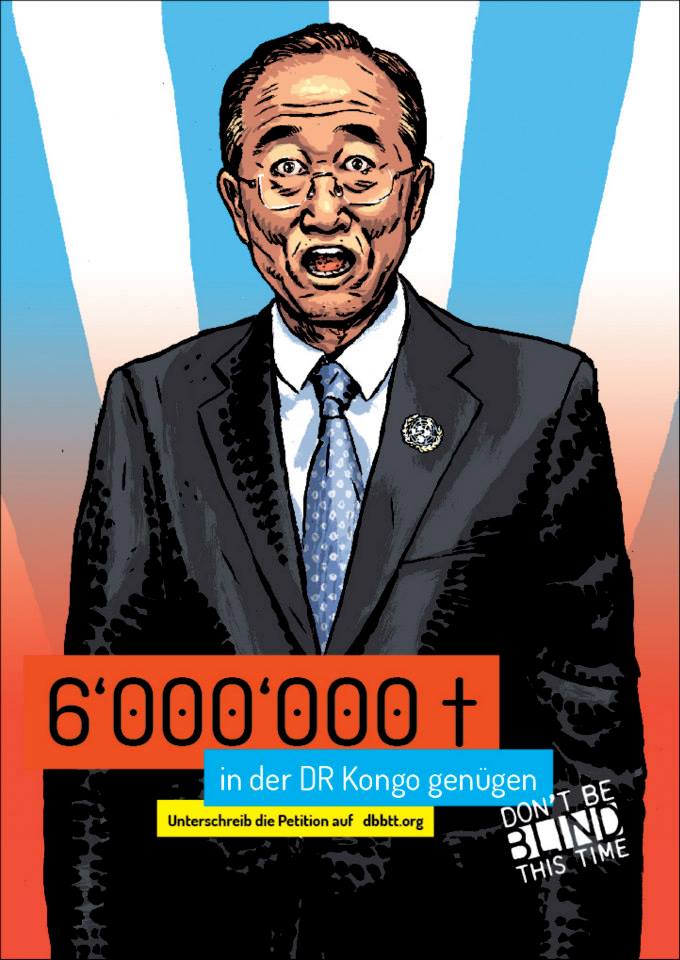
Picture of Ba Ki-Moon, UN Secretary General, by Don't Be Blind This Time
By Bosco Mutarambirwa
"According to Paul Kagame, FDLR is an "organization of genocidaires". This is a slogan that the UN and Feingold have picked up fast, because they think it works. Perhaps Kagame should sue them for stealing his line of deception."
The United Nations is a political organization whose operations are largely financed by governments of the world's richest countries. These governments work to protect the interests of their business enterprises. These business enterprises have one single important objective, that is, to maximize profits for their shareholders. These shareholders and their business enterprises are the main source of tax revenues for their respective governments. The higher the profits the higher the taxes. Governments use these taxes to pay their membership dues to the UN which in turn uses it to pay for flashy cars and exotic trips for its staff around the world. It is a lifestyle many of these UN employees cannot afford anywhere outside the UN system.
Here's the good news: they have killed the body, but they have not killed the soul, and – most importantly – they have not killed Gaddafi's and Sankara's grand ideas.
To maximize profits, multinational business organizations can either take advantage of cheap labor in China and India (while it lasts) and/or exploit the poor uneducated people of Africa. The last option was applied in South and Central America for a long time, but things there have gotten tougher since the rise of the likes of Fidel Castro, Hugo Chavez and Evo Morales who have figured out a way to free their people from exploitation by the first world countries.Africa needs more people with the mindset (not the age) of Robert Mugabe if Africans are ever to get on a similar freedom path as many south American countries have embarked on. Gaddafi is another great mind that Africa has lost to the same tyrants who – through the UN – pretend to save Africa from itself. Here's the good news: they have killed the body, but they have not killed the soul, and – most importantly – they have not killed Gaddafi's and Sankara's grand ideas.
Africa still has many freedom fighters including those in Nigeria, who are trying to stop and prevent further exploitation of their oil resources in Niger Delta. Therefore, whenever you hear about all the gruesome gloom and doom of Boko Haram in Nigeria, take it with a grain of salt, especially when it is being reported by the first world's propaganda media.
Today, Africa has several Tippu Tips, the most notorious being Paul Kagame of Rwanda, Yoweli Museveni of Uganda, and Joseph Kabila of DRC. These are Africans whose job is to sell Africa to the highest bidders.
When it comes to exploiting Africa's resources, the story is no different from that of the slavery era. Tippu Tip was a rich African man who lived in Zanzibar and who had made his fortune selling fellow Africans to western slave traders. An African selling other Africans into slavery? You bet. At the time the African terrain was very rough, with no roads and with lots of malaria mosquitos that the people from the first world did not know how to treat. So they wouldn't take chances. The only way for them to travel to Africa was by boat, and wait for Tippu Tip and his workers to deliver slaves on the coast where they would be loaded on giant vessels on a one way trip to be exploited like wild animals. Fort Jesus in Mombasa – like many other ports along the coast of Africa – was a point of no return for many of our brave brothers and sisters.
Freedom comes at an expensive price. First things first, Africa needs to get rid of its Tippu Tips because they are a cancer, always hard at work recruiting other corrupt minds to help exploit Africa.
Today, Africa has several Tippu Tips, the most notorious being Paul Kagame of Rwanda, Yoweli Museveni of Uganda, and Joseph Kabila of DRC. These are Africans whose job is to sell Africa to the highest bidders. Meles Zenawi was another one. Regardless of the circumstances of Zenawi's death, I believe Ethiopia has finally gotten a chance to have a leader who loves his country and its people. You can tell the progress from all sides, from the Renaissance mega-dam construction project which is on schedule, to the new railroad being launched by the end of first quarter 2015, and many more. Africa does have people who are educated. But they don't spend their time laboring like Indians do to develop their homeland. They chose to serve masters from overseas, Tippu Tip-style, or they migrate through brain drain. In the Arab world, the exploitation is also hard at work, but there's a lot of resistance and educated true patriots are almost as strong as bankrupt minds who chose to serve foreign interests. Hence the rise of "terrorism" or "Islamic extremism" as it's often called in the first world media. These are regular people trying to resist foreign occupation and exploitation. Things may go overboard at times, but the underlying idea – and this is important – is fighting for freedom. It may take time, but Arabs will soon embark on their path to freedom like south America did.
Africa will also have to go through a phase of serious suffering before Africans can reach anywhere. That is the sacrifice you make to get freedom. Freedom comes at an expensive price. First things first, Africa needs to get rid of its Tippu Tips because they are a cancer, always hard at work recruiting other corrupt minds to help exploit Africa. Once exploiters no longer have African intermediaries, they will lay low. They will leave Africa to Africans. They will respect Africans. They will trade and deal with Africans as equal partners.
Never-ending war conflicts in DRC are a good way to allow the UN to stay there on the ground and protect the looters.
The crisis in DRC is all about exploitation of Congo's mineral resources. The UN "blue helmets" contingent – the so called peacekeepers – is the largest in the entire world. But after about 2 decades of MONUSCO's presence in DRC, how does the UN dare claim that it has failed to resolve DRC conflicts? It remains clear, to this day, that the UN's goal is not to help solve DRC problems. The goal is to perpetuate DRC problems because chaos creates a good opportunity for looters of mineral resources whom MONUSCO is in DRC to protect. Remember when Katrina hurricane hit in New Orleans? The bad guys were looting while the good people were fleeing for their lives, unable to protect their properties from looters. This was the same situation in Haiti during the earthquake. Same thing in Ivory Coast during the war. There are many more examples where bad people taking advantage of chaos around the world.
Never-ending war conflicts in DRC are a good way to allow the UN to stay there on the ground and protect the looters. Without bogeymen like FDLR, the UN would have a hard time justifying its presence in DRC. The only reason the UN fought M23, is because M23 was a competitor of the UN's protegés. M23 was another looting organization.
The UN can squash any real competition but they can't destroy FDLR. Why not? Because FDLR is made up of humble people. FDLR is a neighborhood watch police that simply protects those poor hutu refugees hunted down by death squads belonging to blood thirsty Paul Kagame. But FDLR is also a great card for the UN to play in the eyes on clueless onlookers. It is a good tool for UN's effective public relations campaign. FDLR is a good excuse for the UN to remain in DRC.
The UN will make FDLR suffer so the UN can capture chaos on camera and use it as a propaganda tool to justify their presence in DRC. The UN will kill hutu refugees very slowly until you and I act to save them.
So, when you hear Ban Ki Moon or Russ Feingold announce this week that they have failed to solve war issues in DRC, what they are really saying is: we are happy to announce that our dear friends of FDLR have been kind enough to let us stay in DRC and loot as much as we want. It is a bunch of bullshit.
According to Paul Kagame, FDLR is an "organization of genocidaires". This is a slogan that the UN and Feingold have picked up fast, because they think it works. Perhaps Kagame should sue them for stealing his line of deception. As Feingold recently mentioned, FDLR must be dealt with not because of their immense military force, but because of what they stand for. Do I hear dropping bombs against ideology? How does one do that and how does one measure their victory? Yet, even the strongest supporters of FDLR eradication – such as Jason Stearns – will tell you that over 90% of FDLR members are not known criminals.
Just picture the genocide in 1994: Kids under 10 years of age did not commit genocide, did they? No, they survived it, thank god. Today they are young adults, 35 years old. These and their younger brothers and sisters are the ones who are in uniform today fighting in the ranks of FDLR.
And the larger problem is that once you embrace Kagame's lie that FDLR are genocidaires, you also tend to embrace Kagame's notion that all hutus, by extension, are genocidaires. This is not true. In fact, Hutus have not harmed Rwanda's neighbors of DRC. Never. In fact, the UN Mapping Exercise report was about Paul Kagame's crimes of genocide against the people of DRC. Why is Kagame not being held accountable for the genocide he committed in DRC? Why is Kagame not being dealt with the same way Charles Taylor was dealt with when he committed murder in neighboring Sierra Leone? Why was ICTR setup to put ONLY hutus on trial? This injustice is what we ought to be fighting. It is this injustice that is making the world a worse place. Not all Hutus are genocidaires, not all muslims are terrorists. This nonsense has got to stop.
Sadly, the UN will not help the good people of FDLR to negotiate a power-sharing deal in their homeland, unless you and I work harder toward achieving this goal. The UN will not destroy FDLR either because, as explain above, FDLR is the UN's goldmine. The UN will not help FDLR, neither will the UN eradicate FDLR. The UN will make FDLR suffer so the UN can capture chaos on camera and use it as a propaganda tool to justify their presence in DRC. The UN will kill hutu refugees very slowly until you and I act to save them.
 
###
"Hate Cannot Drive Out Hate. Only Love Can Do That", Dr. Martin Luther King.

__._,_.___

Posted by: Nzinink <nzinink@yahoo.com>
Reply via web post Reply to sender Reply to group Start a New Topic Messages in this topic (1)
----------------------------------------------------------------------------------------------------------
The hate of men will pass, and dictators die, and the power they took from the people will return to the people. And so long as men die, liberty will never perish.
I have loved justice and hated iniquity: therefore I die in exile.
The price good men pay for indifference to public affairs is to be ruled by evil men.
When the white man came we had the land and they had the bibles; now they have the land and we have the bibles.
----------------------------------------------------------------------------------------------------------
The Voice of the Poor, the Weak and Powerless.

-----------------------------------------------------------
Post message:  AfricaRealities@yahoogroups.com
Subscribe: AfricaRealities-subscribe@yahoogroups.com
Unsubscribe: AfricaRealities-unsubscribe@yahoogroups.com
List owner: AfricaRealities-owner@yahoogroups.com
__________________________________________________________________

Please consider the environment before printing this email or any attachments.
---------------------------------------------------------------------------------------------------------------------
-http://www.africarealities.com/

-https://www.facebook.com/africarealities

-----------------------------------------------------------------------------------------
-New International Scholarships opportunities: http://www.scholarshipsgate.com
-----------------------------------------------------------------------------------------------

.

__,_._,___

Comments

Support Our Work Now !

Africa Realities Media is independent. Your support helps us expose injustice, challenge silence and produce evidence-based analysis on Africa and the Great Lakes Region.

Recent Posts

Show more
Africa Realities Media offre un espace aux écrivains, chercheurs, experts, activistes, voix communautaires, militants, analystes et personnes ayant une expérience vécue qui souhaitent contribuer à des contenus réfléchis, responsables et courageux sur les changements nécessaires dans la région des Grands Lacs, ainsi que sur les réalités politiques, économiques, culturelles et sociales africaines souvent ignorées, minimisées ou mal représentées. Nos articles et vidéos visent à ouvrir le débat, renforcer la sensibilisation, encourager la pensée critique et favoriser une réflexion plus profonde sur les réalités vécues par les populations africaines. Nous voulons aider les peuples de la région des Grands Lacs à mieux comprendre leurs droits, notamment leurs droits humains, leur droit au développement, leur droit à la dignité, à la sécurité, au bien-être et à une vie meilleure. À travers nos contenus, nous cherchons également à rappeler aux décideurs, aux institutions publiques, aux acteurs régionaux et internationaux, ainsi qu’aux responsables politiques, leur devoir de transparence, de responsabilité et de redevabilité envers les populations qu’ils prétendent servir. Notre objectif est de contribuer à une culture de vérité, de justice, de participation citoyenne et de protection égale pour tous les peuples africains.

Why We Exist

Many abuses facing African people are committed by African states, ruling elites, armed groups, military forces and security services. But these abuses are often sustained by international silence, Western lobbying, trade interests, migration deals, mineral access, diplomatic partnerships and unequal global accountability. Africa Realities Media exposes that system.

Lived Experience Matters

Survivors, displaced communities, refugees, families affected by repression, journalists, activists, women, young people and diaspora voices are not passive subjects. They are knowledge holders. Their experiences must shape policy, advocacy, journalism and public debate. The people closest to injustice are often closest to the solutions.

Our Principle

Africa Realities Media is rooted in one principle: African lives deserve equal truth, equal justice and equal protection.

Popular Posts

[RwandaLibre] Re: Miss Rwanda 2014

  En l'espace de quelques heures, en moins de 24 heures, je viens de lire 3 postings différents, provenant d'autant de membres différents, qui pointent vers la défaillance du système d'éducation au Rwanda. Certains surnomment ironiquement les diplômes générés par ce système "Merci Kagame"! Rares sont les écoles, fussent-elles du tiers-monde, où les étudiants à la fin de leurs études seraient incapables de fonctionner dans d'autres écoles à l'étranger. Pourtant c'est la triste réalité actuelle au Rwanda. Pour ceux qui connaissent le fonctionnement des Nations-Unies, il est grand temps de dépêcher sur place un rapporteur spécial... L'UNESCO peut-être! Sibomana Jean Bosco. *DHR* BBC: Iyumvire uburyo Kagame na FPR bazambije uburezi mu Rwanda kuburyo ababyeyi bifite bahitamo kohereza abana babo hanze Libellés : Forums Peter Rwagasabo - 29 janv. à rwagasabo, (bcc:Democrac...

The FDLR Myth: How Rwanda Weaponises a Diminished Threat to Justify Occupation

The FDLR Myth: How Rwanda Weaponises a Diminished Threat to Justify Occupation Investigation Exposes Contradictions in Rwanda's Security Narrative For over a decade, Rwanda has justified its military presence in eastern Democratic Republic of Congo by citing threats from the FDLR, a Hutu militia group linked to the 1994 genocide. But an investigation into FDLR's actual capabilities, Rwanda's military operations, and patterns of violence reveals a narrative that does not match reality. The FDLR threat, whilst real, has been systematically exaggerated and manipulated to justify objectives that have nothing to do with the militia group. Introduction The Democratic Forces for the Liberation of Rwanda (FDLR) occupies a central position in Rwanda's justification for military intervention in eastern Democratic Republic of Congo. For more than two decades, Rwandan authorities have portrayed the militia group as an existential threat requiring sustaine...

The Aggressor’s Complaint: Why Rwanda’s “Biased” US Sanctions Argument Echoes Russia

Kigali wants Washington to punish Congo too. But a ceasefire that leaves the occupier in place is not peace; it is occupation without noise. African lives are not worth less. African deaths are not normal. Western interests must never become a licence to kill African people. Introduction: A Familiar Complaint On 29 June 2026, Rwanda’s Minister of Foreign Affairs, Olivier Nduhungirehe, sat before the cameras of France 24 and declared that his country was “disappointed by the increasingly biased US mediation” in the conflict with the Democratic Republic of Congo. He asked why sanctions had targeted only Rwanda. He called the measures unfair, one-sided and counterproductive. Weeks earlier, President Paul Kagame had told Jeune Afrique that sanctions and threats were insults thrown at Rwanda, and accused Washington of exerting heavy pressure on Rwanda while treating the DRC more delicately. The grievance sounds reasonable until you remember where you have heard it before. Since 2022, the Kr...

THE GENOCIDE AGAINST THE HUTU. PART 2: DOCUMENTED MASS KILLINGS OF HUTU POPULATIONS

MASS KILLINGS OF HUTU BEFORE, DURING, AND AFTER 1994 IN RWANDA, DRC AND UGANDA INTRODUCTION TO PART 2 Part 1 established the assassination of President Habyarimana, the Bruguière and Spanish investigations, Kagame's responsibility for starting the war, the Kigali massacres, challenges to the "genocide against the Tutsi only" narrative, and the need for UN framework revision. Part 2 documents specific mass killings of Hutu populations that have been systematically erased from history: the Kibeho massacre of 1995, the Byumba Stadium massacre of 1994, the hunting and slaughter of Hutu refugees in the Democratic Republic of Congo from 1996 to 1997, killings in Uganda, and the pattern of political assassinations and property seizures. 2. THE KIBEHO MASSACRE (22 APRIL 1995) 2.1 The Camp and Its Population By April 1995, the Kibeho internally displaced persons camp in Gikongoro prefecture southwestern Rwanda held between 80,000 and 100,000...

[RwandaLibre] Itangazo ry'inama yahuje amashyaka i Buruseli kuwa 01/02/2014 -

  http://www.veritasinfo.fr/m/article-122363461.html Itangazo ry'inama yahuje amashyaka i Buruseli kuwa 01/02/2014 Nk'uko byari biteganyijwe, kuri uyu wa gatandatu tariki ya 01/02/2014, i Buruseli mu Bubiligi hateraniye inama y'amashyaka atavuga rumwe n'ubutegetsi bwa Perezida Paul Kagame. Ku mashyaka icumi yari yatumiwe, ayabonetse mu nama ni atandatu (60%), ari yo : 1. Forces Démocratiques Unifiées (FDU-Inkingi) ; 2. Forces Démocratiques de Libération du Rwanda (FDLR) ; 3. Pacte Démocratique du Peuple (PDP-Imanzi) ; 4. Parti pour la Démocratie au Rwanda (PDR-Ihumure) ; 5. Parti Social (PS-Imberakuri) ; 6. Rwandan Dream Initiative (RDI-Rwanda Rwiza). Ihuriro FCLR - Ubumwe naryo ryari rihagarariwe muri iyo nama.   Mu gutangira inama, abayijemo batoye umuyobozi wayo. Bamaze gusuzuma no kwemeza umurongo w'ibyigwa, bemeje ko muri iki gihe, ubufatanye  bw'amashyaka ya opposition ari ngombwa cyane  ...

Desperate Kagame: Where Does He Go From Here—and What Comes Next?

  How Paul Kagame Uses Diplomats' "Bury Your Head in the Sand" Strategy as a Green Light to Continue Rwanda's War in the DRC Africa Realities Media   |   17 July 2026 The purpose of this article is to expose a deliberate and systematic strategy: Paul Kagame's years-long practice of creating events — diplomatic dinners, RPF party meetings, genocide commemorations, international business forums and RPF Bureau Politique addresses — to which he invites foreign ambassadors and the world's business and political elite for one purpose: to explain, justify, and defend Rwanda's military invasion of the Democratic Republic of Congo. Everybody who follows this region knows the strategy now. The same narrative. The same arguments. The same defiance. At one event he tells the Trump Administration to go to hell. At the next he says those sanctioning him will leave power and he will remain. At the RPF Bureau Politique of 17 July 2026, he tells ambassadors that the on...

Kagame désespéré : où va-t-il aller maintenant — et que va-t-il se passer ensuite ?

Comment Paul Kagame utilise la stratégie diplomatique de « l’autruche » comme feu vert pour poursuivre la guerre du Rwanda en RDC Le but de cet article est d’exposer une stratégie délibérée et systématique : la pratique, poursuivie depuis des années par Paul Kagame, consistant à créer des événements — dîners diplomatiques, réunions du parti FPR, commémorations du génocide, forums internationaux d’affaires et interventions devant le Bureau Politique du FPR — auxquels il invite des ambassadeurs étrangers ainsi que l’élite mondiale des affaires et de la politique dans un seul but : expliquer, justifier et défendre l’invasion militaire de la République démocratique du Congo par le Rwanda. Tous ceux qui suivent cette région connaissent désormais cette stratégie. Le même récit. Les mêmes arguments. La même défiance. Lors d’un événement, il dit à l’administration Trump d’aller au diable. Lors du suivant, il affirme que ceux qui le sanctionnent quitteront le pouvoir tandis que lui restera. Lor...

Analyse de l'audition de M Dacian Cioloș, candidat au poste de Secrétaire général de la Francophonie

  Le 30 juin 2026, pour la première fois en cinquante-six ans d'existence de l'Organisation internationale de la Francophonie, les candidats au poste de Secrétaire général ont été auditionnés publiquement devant les ministres des Affaires étrangères des 53 États membres de plein droit, réunis en Conférence ministérielle extraordinaire à Paris. Parmi les quatre prétendants au mandat 2027-2030, qui sera attribué par les chefs d'État au XXe Sommet de la Francophonie à Phnom Penh les 15 et 16 novembre 2026, figure un profil inédit : Dacian Cioloș, ancien Premier ministre de Roumanie, ancien commissaire européen à l'Agriculture et ancien président du groupe Renew au Parlement européen, seul candidat non africain de la course. Cet article, premier d'une série de cinq consacrée aux auditions, analyse la prestation de M. Cioloș sur huit axes : la vision, l'innovation, le développement des communautés locales, la promotion de la langue française, les conflits et la s...

Analyse de l'audition de Mme Coumba Bâ, candidate au poste de Secrétaire général de la Francophonie

La francophonie utile à l'épreuve des projets concrets Conseillère à la présidence mauritanienne, forte d'une longue expérience auprès de cinq chefs d'État successifs de son pays, Coumba Bâ porte la candidature de la Mauritanie au poste de Secrétaire général de la Francophonie, dont le titulaire du mandat 2027-2030 sera désigné par les chefs d'État au XXe Sommet de la Francophonie, prévu à Phnom Penh les 15 et 16 novembre 2026. Son audition publique du 30 juin 2026 à Paris, devant les ministres des Affaires étrangères des 53 États membres de plein droit, reposait sur un positionnement singulier : celui d'un pays carrefour, à la fois africain, arabe et sahélien, présenté comme un pont possible vers les États qui ont quitté l'organisation. Cet article, quatrième d'une série de cinq consacrée aux auditions, analyse sa prestation sur huit axes : la vision, l'innovation, le développement des communautés locales, la promotion de la langue française, les confli...

Analyse de l'audition de Mme Juliana Lumumba, candidate au poste de Secrétaire général de la Francophonie

La refondation proclamée, l'architecture manquante Fille de Patrice Lumumba et ancienne ministre congolaise, Juliana Lumumba porte la candidature de la République démocratique du Congo au poste de Secrétaire général de la Francophonie, dont le titulaire du mandat 2027-2030 sera désigné par les chefs d'État au XXe Sommet de la Francophonie, prévu à Phnom Penh les 15 et 16 novembre 2026. Son audition publique du 30 juin 2026 à Paris, devant les ministres des Affaires étrangères des 53 États membres de plein droit, était particulièrement attendue : sa candidature incarne à la fois le rééquilibrage africain de l'organisation et le face-à-face diplomatique entre Kinshasa et Kigali, dont l'élection est devenue l'un des théâtres. Cet article, deuxième d'une série de cinq consacrée aux auditions, analyse sa prestation sur huit axes : la vision, l'innovation, le développement des communautés locales, la promotion de la langue française, les conflits et la sécurité en...

Why Africa Realities Media Is Different

Africa Realities Media speaks to Africa and to the developed world. Many abuses facing African people are committed by African states and ruling elites, but they are often protected by international silence, lobbying, public relations, trade interests, migration deals and unequal global accountability. While governments pay lobbyists to present a good image abroad, ordinary African people continue to face violence, hunger, disease, poverty, repression and exclusion. We challenge the normalisation of African suffering and demand equal truth, equal justice and equal protection.

Pourquoi Africa Realities Media est différent?

Africa Realities Media s’adresse à l’Afrique et au monde développé. De nombreux abus subis par les peuples africains sont commis par des États africains et des élites dirigeantes, mais ils sont souvent protégés par le silence international, le lobbying, les relations publiques, les intérêts commerciaux, les accords migratoires et une responsabilité mondiale inégale. Tandis que des gouvernements paient des lobbyistes pour présenter une bonne image à l’étranger, des Africains ordinaires continuent de faire face à la violence, à la faim, aux maladies, à la pauvreté, à la répression et à l’exclusion. Nous contestons la normalisation de la souffrance africaine et exigeons une vérité égale, une justice égale et une protection égale.

BBC News

Policy and Systems Change

Our work is designed to trigger debate, discomfort and action. We do not only expose injustice; we work for policy and systems change. We want governments and institutions to address the root causes of inequality, disadvantage, discrimination, exclusion and barriers affecting African people. We believe lasting change must be shaped by people with lived experience.

Exposing Injustice in Africa

Africa Realities Media is an independent African accountability platform based in London. We report, analyse and challenge the systems that shape African suffering, silence African victims and protect abusive power. We are not here to repeat diplomatic language. We are here to ask the questions that are often avoided: why are African deaths treated as normal? Why are African victims given less urgency? Why are governments that imprison, exclude, displace or kill their own people protected when they serve powerful international interests?

Africanews

Africa Realities Media gives space to writers, researchers, experts, activists, community voices, campaigners, analysts and people with lived experience who want to contribute thoughtful, responsible and courageous content about the changes needed in the region, as well as the political, economic, cultural and social African realities that are often ignored, minimised or misrepresented. Our articles and videos aim to encourage debate, raise awareness, stimulate critical thinking and support reflection. We seek to help people in the Great Lakes Region understand their rights to human rights, development and wellbeing, while also encouraging decision-makers to be more transparent, responsive and accountable.

Appel à contributions

Sensibilisez le public aux causes qui vous tiennent à cœur. Prenez part au changement que vous souhaitez voir émerger. Aidez à combattre l’injustice partout où elle se manifeste.

Africa Realities Media accueille des articles originaux, analyses, tribunes, réflexions communautaires et commentaires fondés sur des faits concernant la région des Grands Lacs africains, ainsi que les questions liées à la justice, aux droits humains, à la gouvernance, aux conflits, à la paix, aux réfugiés, aux ressources naturelles et à la responsabilité publique en Afrique.

Nous accueillons également les annonces concernant de nouvelles ou d’anciennes publications liées à nos domaines d’intérêt. Vous pouvez annoncer gratuitement votre publication, notamment un livre, un rapport, une étude, un article académique ou tout autre travail pertinent.

Les articles doivent être rédigés en anglais ou en français et ne doivent pas dépasser 1 500 mots.

Veuillez inclure le nom complet de l’auteur, qui sera publié avec l’article s’il est accepté.

Avant de soumettre votre article, veuillez d’abord lire nos pages du site web afin de vérifier si votre article correspond à nos priorités éditoriales, à nos thèmes et à nos domaines d’intérêt.

Si vous avez un article, un commentaire ou une annonce de publication à partager avec un public plus large, veuillez l’envoyer par email à :

africarealitiesmedia@gmail.com

Nous étudierons la possibilité de publier gratuitement les articles et annonces de publications appropriés s’ils répondent à nos critères éditoriaux, notamment la pertinence, la clarté, l’originalité, l’intérêt public, le respect des communautés concernées et l’utilisation responsable des informations et des preuves.

Les articles sont publiés tels qu’ils sont soumis s’ils répondent à nos critères et à notre politique éditoriale. Nous ne procédons pas à une modification supplémentaire de votre article avant sa publication.